 Xiaohongshu
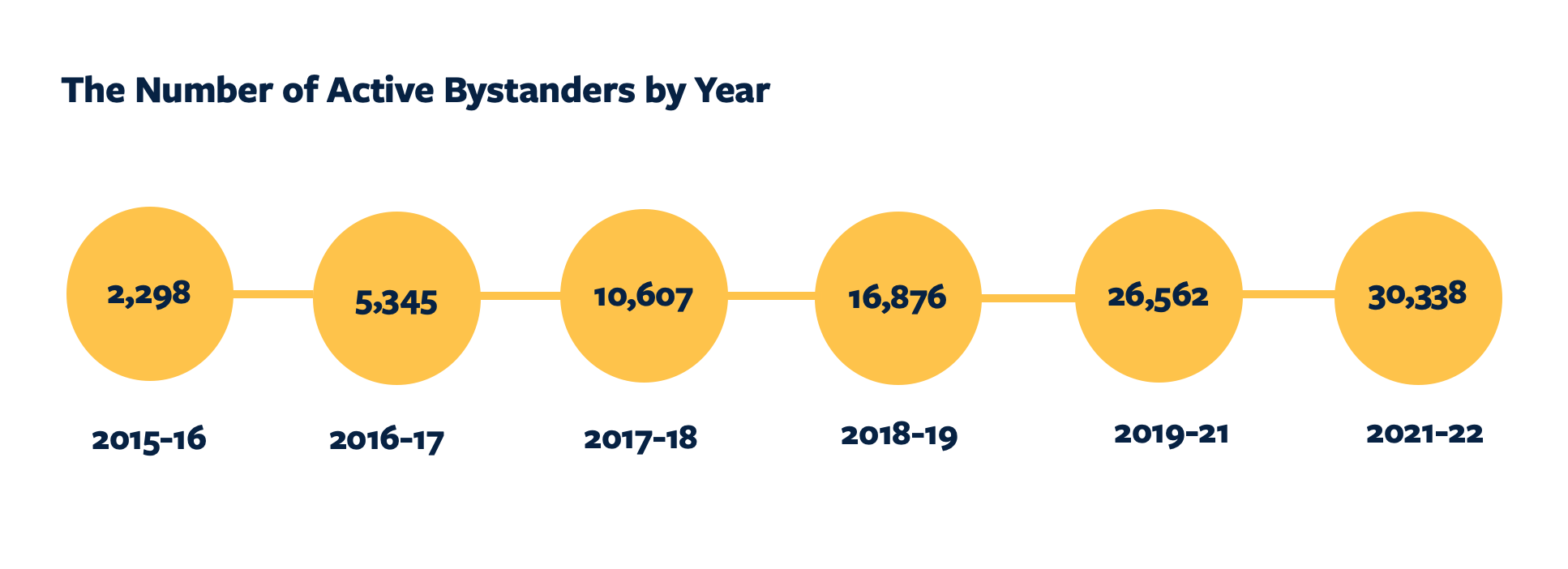
Since launching at UCL, The Active Bystander Programme has trained over 65,000 students, student leaders and student staff, empowering them to identify and challenge poor behaviour to help create a safer and more inclusive environment. But how did we get here?
Zero Tolerance Project, 2015-2018
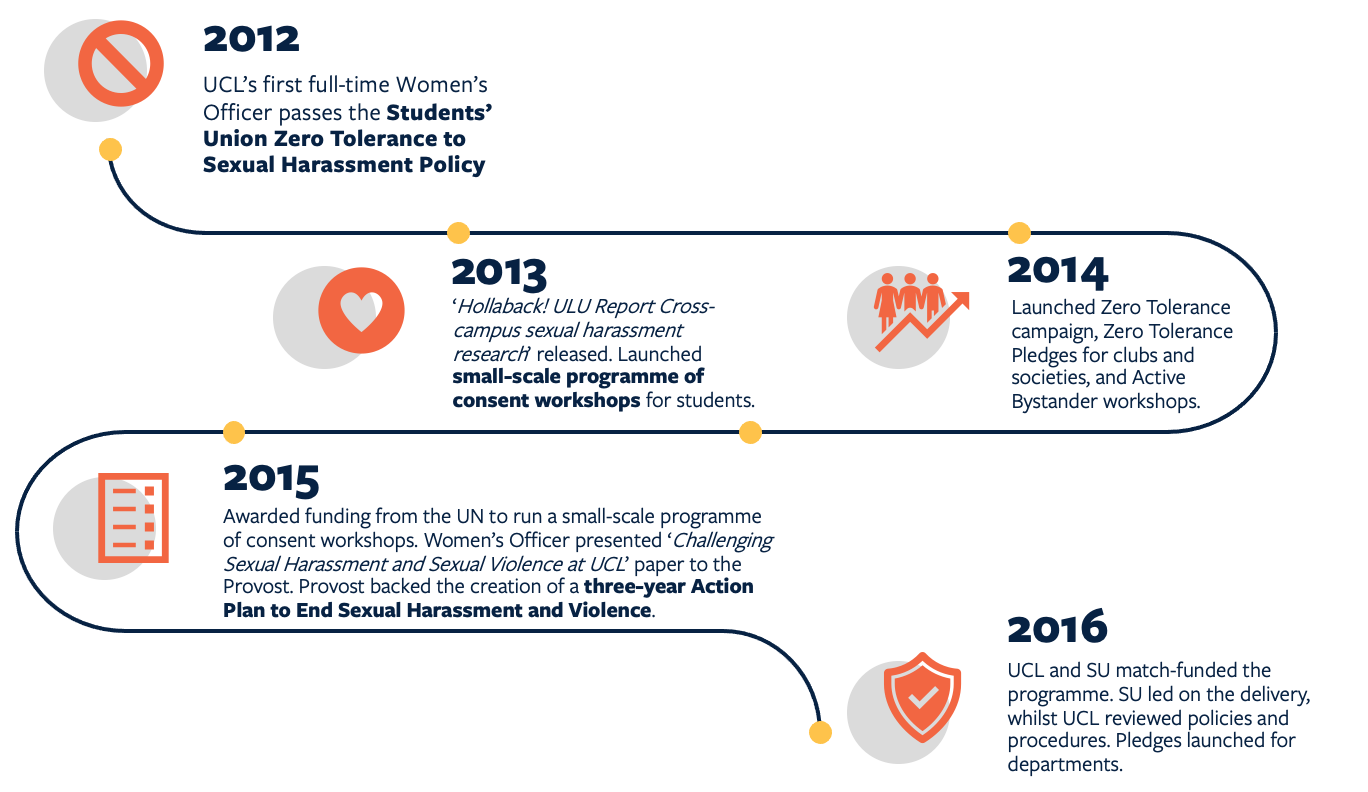
Aiming to eliminate experiences of sexual harassment at UCL, we launched our Zero Tolerance to Sexual Harassment Policy in 2012, followed by the Zero Tolerance to Sexual Harassment campaign in 2014.
This included the Zero Tolerance Pledge, signed by Presidents and Treasurers of Clubs & Societies, and later academic departments, to signal their commitment never to tolerate sexual harassment, and to always support students and staff who experience it. We also ran Zero Tolerance Workshops for new students for those who had signed the pledge.
The workshops aimed to empower students to recognise and respond to inappropriate behaviour if they witness it and to encourage them to take action, when safe and appropriate to do so. Over the next couple of years, we worked on making the programme more inclusive, interactive and practical.
In 2016, we worked with UCL's EDI team to plan staff training to complement student training and change the overall culture at UCL. In 2017, the Zero Tolerance Pledge became mandatory for Clubs & Societies.
The Active Bystander Programme, 2019 – present
Following the success of the Zero Tolerance Project, Students’ Union UCL sought to create a programme that addressed a greater range of issues faced by UCL students. The Zero Tolerance Project became the Active Bystander Programme, with a new mission statement:
‘We will eliminate experiences of bullying, harassment and sexual misconduct at UCL’.
We wanted to move away from ‘Zero Tolerance’ language, and towards language around building inclusive communities through training. We also wanted to move towards making the training mandatory for all incoming students, and facilitate an online pre-arrival module that introduced students to the concepts of EDI.
The Active Bystander Programme became a core part of students' induction, aiming to ensure all students understand bullying, harassment, and sexual misconduct, and how to practically intervene if they witness or experience any of these unacceptable behaviours on campus or beyond. This programme involved an online module and a live in-person workshop.
Following the outbreak of the Covid-19 pandemic in 2020, the workshops moved online. This continued throughout 2021 and the beginning of 2022, with thousands of students participating in online Zoom workshops run by student Workshop Leaders.
By mid-2022 some workshops slowly transitioned back on campus and the programme began to train Students’ Union staff, with unique training on bullying, harassment, and sexual misconduct in the workplace.
Active Bystander has continued to grow year on year, with the majority of workshops taking place in-person by 2023. Workshop leaders delivered sessions across our Bloomsbury, UCL East, Canary Wharf and Surrey campuses. The programme expanded again in 2024, with a team of 30+ student workshop leaders delivering hundreds of sessions throughout Welcome and Term 1.
2025: Introduction of E6
In August 2025, the Office for Students introduced Condition E6, a new regulatory requirement which mandates all higher education providers in England to take steps which make a significant and credible difference in reducing harassment and sexual misconduct. Over the summer of 2025, we worked closely with UCL to ensure our Active Programme fully aligned with E6, strengthening our relationships with UCL departments and increasing the number of sessions we offered in order to reach as many incoming students as possible. The 2025-6 academic year saw a massive expansion for the programme, with over 22,000 students completing the online module or attending a live workshop.
2025: Pilot of Consent and Tackling Sexual Violence Workshops
To strengthen our commitment to E6, we developed and piloted a new "Consent and Tackling Sexual Violence" workshop over the 2025-6 academic year. The workshop aims to develop students' understanding of consent as a practice, and empower them to engage critically with rape culture and sexual violence as systemic cultural issues. It also builds on learning from the Active Bystander programme utilising intervention techniques to consider how to challenge these issues within and beyond UCL. Our pilot in collaboration with TeamUCL trained nearly 150 students. Feedback was extremely positive, with many requesting that this this session become mandatory all UCL students. We envision this vital addition to our Active Bystander Programme becoming a core part of UCL students' experience in the future.
The future
From September 2026, we will continue to collaborate with departments to offer a maximum of 100 sessions per week throughout Term 1. Live in-person workshops will ensure all new students understand what constitutes bullying, harassment, and sexual misconduct, and how to safely intervene if they witness any of these behaviours. From reading week, we will also continue to expand delivery of our Consent and Tackling Sexual Violence workshop, strengthening our commitment to E6.
We will continue to pursue the long standing aims of the Active Bystander Programme, namely:
- To ensure all new and returning students are trained on the Active Bystander course
- To ensure every student is aware about how to report any incident(s) that take place at UCL and/or remotely
- To ensure every student feels comfortable to safely intervene in situations that include bullying, harassment and sexual misconduct
- To deliver Active Bystander training to Students' Union clubs and societies as part of compulsory training
- For students to feel safe during their time at UCL